Lower Back Pain: What's Really Going On (and What Actually Helps)
If you've ever bent down to pick something up and felt your lower back seize, you're in good company — it's one of the most common reasons people come and see us. Whether it's from a weekend in the garden, a long stretch at a desk, or nothing you can quite pin down, here's what's usually behind it and what actually helps.

What Usually Causes It
Lower back pain rarely comes from one single event, even when it feels that way. More often it builds up from a combination of things:
• Sitting for long periods, which places sustained load through the lower back and hips
• Lifting with poor technique, or lifting something heavier or more awkward than usual
• Weak or under-used core and glute muscles, which leaves the lower back doing more than its share of the work
• An old injury that never fully finished its rehab, leaving the area more vulnerable
• A sudden increase in activity — a big weekend of gardening or a return to exercise after time off
That "tweaked my back tying my shoelace" moment is almost always the final straw, not the actual cause — the back was already under strain before that point.
When to Get It Checked
Most lower back pain settles with the right guidance and doesn't need to be a long-term problem. That said, it's worth getting assessed rather than waiting it out if:
• The pain has lasted more than a few days without easing
• You notice pain, tingling, numbness, or weakness running down one or both legs
• It followed a fall, accident, or other trauma
• It's affecting your sleep, work, or ability to move around normally
None of these automatically mean something serious — but they're a good reason to get a proper assessment rather than guess.
How Osteopathy Helps
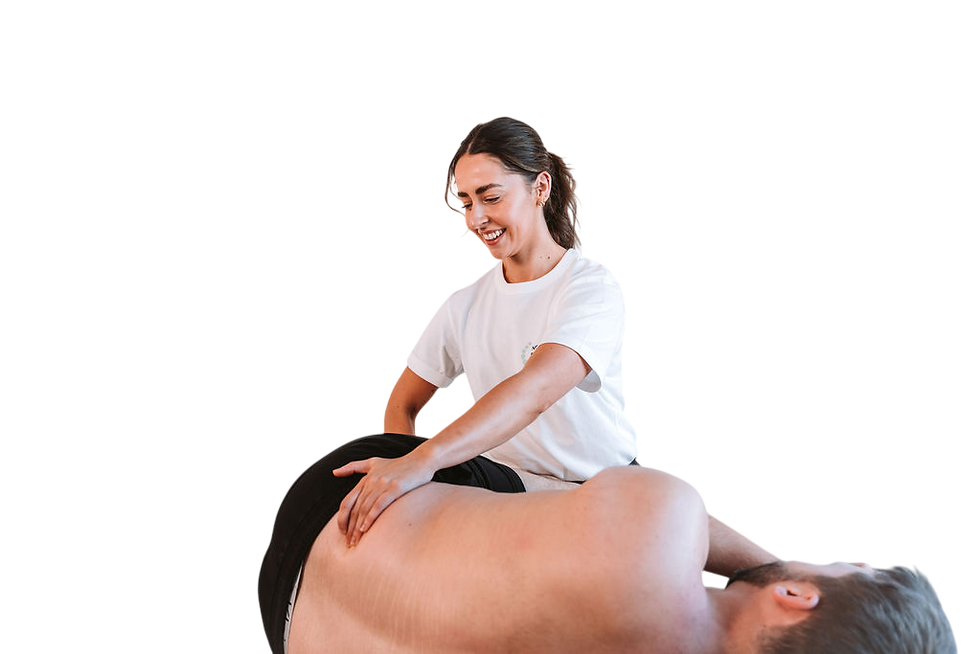
At North East Osteopaths, we start by figuring out what's actually driving the pain — not just where it hurts, but how your whole body is moving, sitting, and loading through the day. Treatment typically combines hands-on techniques (like soft tissue work and joint mobilisation) to ease pain and restore movement, with a tailored exercise plan to address the underlying cause, whether that's weak glutes, stiff hips, or simply too much time sitting still.
That second part — the exercise plan — is where a lot of back pain treatment falls short elsewhere. Being handed a sheet of exercises to figure out alone rarely works. That's why our clinic is based upstairs at Pivot Sports Performance in Bundoora, with a fully equipped gym right there. It means the plan we give you isn't just something to take home and hope for the best with — we can guide you through it properly, in person, as your back gets stronger.
A Few Things You Can Try Now
• Keep moving where you can — gentle walking is usually far better than resting completely
• Avoid sitting in one position for too long; get up and move every 30–45 minutes
• Use heat or a warm shower to ease muscle tension in the first day or two
• Ease back into normal activity gradually rather than pushing through pain or avoiding movement entirely
These are general starting points — they're not a substitute for a proper assessment, especially if the pain is sticking around or getting worse.
Ready to Get It Sorted?
If your lower back has been bothering you — whether it started last week or it's an old, familiar ache — we'd love to help you get to the bottom of it. Book an appointment with Steve or Tahlia at North East Osteopaths in Bundoora, and let's get you moving properly again.


Comments